Dynamic Bankroll Frameworks for Real-Time Adjustments in Tennis, Basketball, and Racing
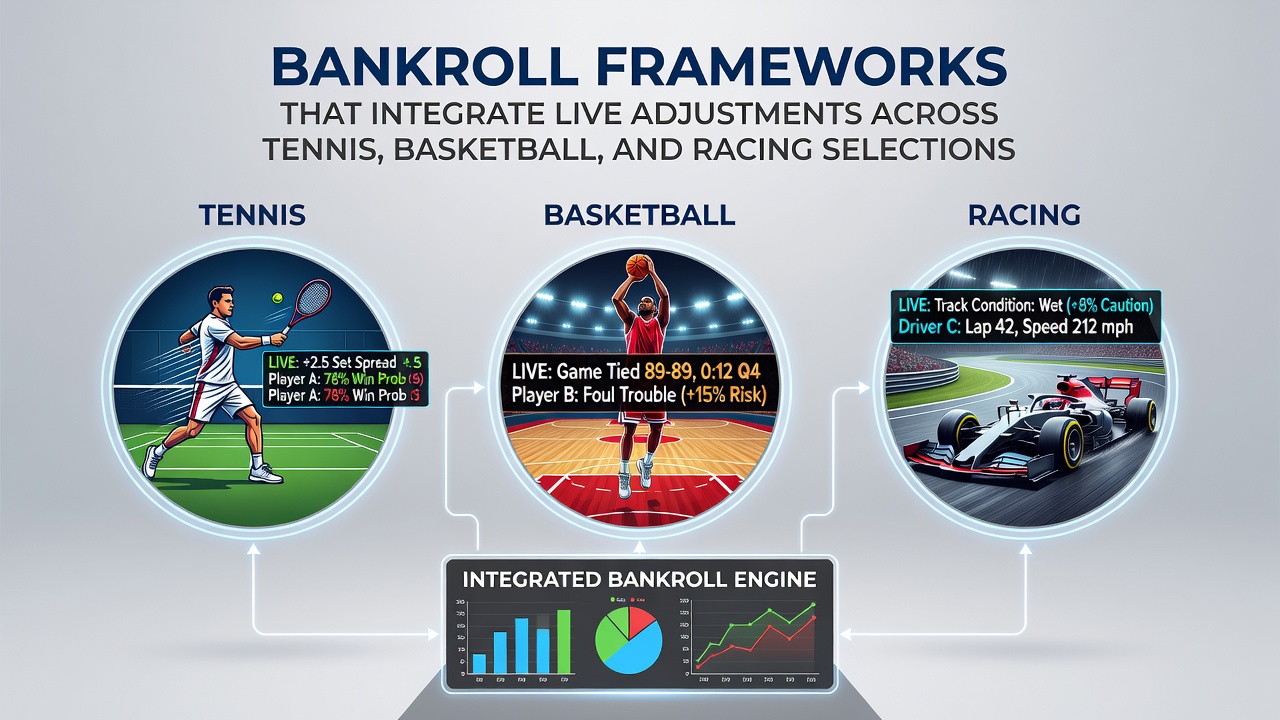
Bankroll frameworks that incorporate live adjustments rely on continuous data feeds from matches and races, allowing proportional stake recalibrations as events unfold. These systems track variables such as point differentials in tennis, quarter scores in basketball, and track pace changes in racing, then apply predefined multipliers or reductions to maintain overall exposure within set parameters.
Core Components of Live-Adjusted Models
Researchers at institutions like the University of Nevada, Las Vegas have documented how real-time models blend pre-event probability estimates with in-play metrics, and this integration occurs through algorithms that update expected values every few seconds during active play. Data shows that frameworks using these updates reduce variance in final returns compared to static allocation methods, especially when selections span multiple disciplines.
Operators and analysts often segment bankrolls into dedicated pools for each sport, then link those pools via a central monitoring layer that enforces cross-sport correlation rules. For instance, a sudden shift in tennis set momentum might trigger a reduction in basketball exposure if the two events share similar risk profiles in the model.
Tennis Selection Adjustments
In tennis, live adjustments focus on break-point conversion rates and serve-hold percentages that fluctuate during sets. Frameworks pull these statistics from match data streams and recalculate stake sizes for subsequent games or tiebreaks, and this process prevents over-commitment when one player dominates early exchanges yet faces fatigue later. Observers note that models incorporating rally length and unforced error counts deliver more stable accumulator outcomes across multiple courts operating simultaneously.
Basketball Quarter-Level Recalibrations
Basketball frameworks emphasize pace and efficiency metrics that reset each quarter, enabling stake increases when a team exceeds projected points in the paint or from beyond the arc. These adjustments draw from player substitution patterns and foul accumulation data, which often signal defensive breakdowns that favor the opposing side. Studies indicate that quarter-by-quarter resets within a single bankroll slice help isolate short-term swings from longer-term selection viability.

Racing Pace and Condition Monitoring
Racing selections incorporate live track condition reports and sectional timing that update as horses reach key markers. Bankroll rules here shift allocations toward late closers when early fractions exceed historical averages, or they scale back on favorites whose early speed figures drop below thresholds. Figures from racing analytics groups reveal that such condition-based pivots maintain exposure limits even when multiple races run concurrently across different venues.
Cross-Sport Integration Techniques
Integrated frameworks apply a master correlation matrix that weighs simultaneous events in tennis, basketball, and racing, then adjusts individual stakes to keep aggregate risk within daily or weekly caps. A strong serve hold streak in tennis might prompt a temporary reduction in basketball live bets if both markets exhibit similar volatility spikes, while a racing photo finish could freeze further tennis exposure until the outcome settles. This matrix approach draws on historical cross-sport covariance data compiled over multiple seasons.
Systems deployed by professional syndicates often include automated alerts that pause new selections across all three categories when cumulative drawdown reaches preset levels. In July 2026, updated data pipelines from international racing federations and league statistics providers further refined these pause thresholds, enabling more precise synchronization between live feeds.
Implementation Considerations
Successful deployment requires reliable latency under 500 milliseconds for data ingestion, along with fallback protocols that revert to conservative stake sizes if feeds lag. Those who have studied these systems report that hybrid manual-override layers, where human supervisors approve large adjustments, reduce execution errors during high-volume periods. External resources such as NCAA sports wagering guidelines outline baseline governance practices that many frameworks adapt for multi-sport environments.
Conclusion
Bankroll frameworks that integrate live adjustments across tennis, basketball, and racing selections operate through layered data inputs, real-time recalculations, and cross-market safeguards that keep overall exposure aligned with predefined targets. Evidence from academic and industry reports continues to show measurable improvements in outcome stability when these components function together, and ongoing refinements in data infrastructure support their broader adoption.